
Salvage Value Meaning and Example

Businesses often conduct market research or consult industry experts to evaluate demand and pricing trends for similar used assets. Factors such as market saturation, technological obsolescence, and economic conditions play a role, as do regulatory considerations like environmental laws. Accurate estimation of residual value is crucial, as it directly affects depreciation expense and the asset’s net book value on financial statements. Salvage value is subtracted from an asset’s purchase cost to determine the total amount that can be depreciated over its useful life. This calculation ensures that depreciation expenses reflect the asset’s anticipated residual value, leading to more accurate financial reporting.
- A change in salvage value can also affect the asset’s useful life, which can impact the amount of depreciation you can claim.
- From different perspectives, experts offer insights on estimating salvage value.
- Investors use salvage value to determine the fair price of an object, while business owners and tax preparers use it to deduct from their yearly tax liabilities.
- It’s essential to consider the life cycle of an asset when deciding whether to ignore depreciation in business computing.
- Therefore, the salvage value is simply the financial proceeds a company may expect to receive for an asset when it’s disposed of, though it may not factor in selling or disposal costs.
Salvage Value Meaning and Example

Looking at past sales of similar assets helps estimate what a piece of equipment, vehicle, or building will be worth at the end of its life. Some industries also have standardized percentages for salvage value based on asset type and lifespan. Investors and stakeholders often look at asset values, including salvage value, to assess how well a company manages its assets. A business that consistently underestimates or overestimates salvage value can give an inaccurate picture of its financial health. salvage value By understanding and properly calculating salvage value, businesses can make better decisions when purchasing, using, and eventually disposing of their assets.

How Does the Salvage Value Calculator Beneficial?
The total depreciation of an asset is calculated by subtracting its salvage value from its original purchase price. A higher salvage value means less depreciation expense each year, while a lower or zero salvage value means Catch Up Bookkeeping the asset depreciates more. Different depreciation methods treat salvage value differently, which affects financial reporting. The choice of depreciation method can significantly influence the financial portrayal of an asset’s value over time. For instance, using the straight-line method, the asset’s cost is evenly distributed over its useful life, resulting in a consistent depreciation expense each period.
Inventory Management for Small Businesses: Best Ways

Deskera ERP provides comprehensive asset management features that streamline the tracking, depreciation, and eventual disposal of assets. Also integrating an AI mechanism like ERP.AI to your ERP system can make it smarter by enhancing enterprise process, data governance & decision-making. When calculating depreciation, an asset’s salvage value is subtracted from its initial cost to determine total depreciation over the asset’s useful life. From there, accountants have several options to calculate each year’s depreciation. Accountants and income tax regulations often assume that plant assets will have no salvage value. This will result in an asset’s entire cost being depreciated during the years that the asset is used in the business.
Using Salvage Value to Determine Depreciation
Furthermore, knowing the salvage value helps businesses in decision-making regarding asset replacement or disposal. Understanding salvage value is essential for businesses as it influences asset depreciation, impacting financial statements and tax obligations. This concept helps companies plan for the end of an asset’s useful life by estimating its residual worth, aiding in asset management and disposal decisions. Salvage value is the estimated residual value of an asset at the end of its useful life. It is calculated by assessing the asset’s expected market value after depreciation, considering wear and tear, obsolescence, and resale potential. The calculation typically involves analyzing historical data, market trends, and expert appraisals.
Risk Management
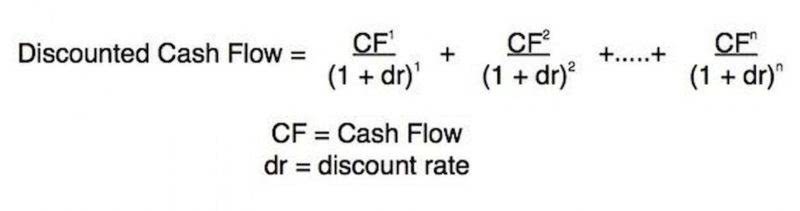
The after tax salvage value online calculator provides us the after-tax value of the salvage of the asset. Briefly, suppose we’re currently attempting to determine the salvage value of a car, which was purchased four years ago for $100,000. The impact of the salvage (residual) value assumption on the annual depreciation of the asset is as follows. If unearned revenue the residual value assumption is set as zero, then the depreciation expense each year will be higher, and the tax benefits from depreciation will be fully maximized.
- To demonstrate, we’ll use the example of a company purchasing a $50,000 computer server with an expected useful life of five years and a $5,000 salvage value.
- In the straight-line method, salvage value is deducted from the purchase price before dividing by useful life, ensuring depreciation is spread evenly.
- Enter the original value, depreciation rate, and age of the asset into the tool to calculate its salvage value.
- This method applies a fixed depreciation percentage to the remaining book value each year.
- Explore how salvage value influences financial planning, affecting depreciation, financial statements, and investment decisions.
- Estimate the duration (typically in years) when the asset will be operational and productive for the business.
In general, the salvage value is important because it will be the carrying value of the asset on a company’s books after depreciation has been fully expensed. It is based on the value a company expects to receive from the sale of the asset at the end of its useful life. In some cases, salvage value may just be a value the company believes it can obtain by selling a depreciated, inoperable asset for parts. Therefore, businesses have this practice of selling their assets after they have run their effective useful life span. This life span is the estimated time till which assets will be useful, measured in years.
What is Salvage Value and How to Estimate It in Your Capital Budgeting Analysis
This anticipated scrap value percentage refers to the efficacy of the machinery at the end of its useful life. Technology and SoftwareWith rapid technological advancements, the salvage value of tech assets can be tricky to estimate. Salvage value is not just a residual figure in accounting; it plays a pivotal role in various aspects of financial management and decision-making.